This release focused on compatibility with the upstream GNU Coreutils 9.6 release. This is why the number of passing tests didn’t change much – our effort was directed at adapting to the new upstream version rather than fixing existing test failures.
Passing GNU tests increased to 507 (+1 compared to 0.0.29).
If an undefined weak symbol is not resolved to a defined symbol at link time, the linker can choose whether to promote the symbol to a dynamic symbol or not. If promoted, the weak symbol has another chance to be resolved to a defined symbol at load time. Otherwise, it is resolved to address 0 at link time. Previously, mold always resolved remaining undefined weak symbols in an executable to address 0 at link time. Now, you can instruct the linker to promote them to dynamic symbols using -z dynamic-undefined-weak. (1822e47)
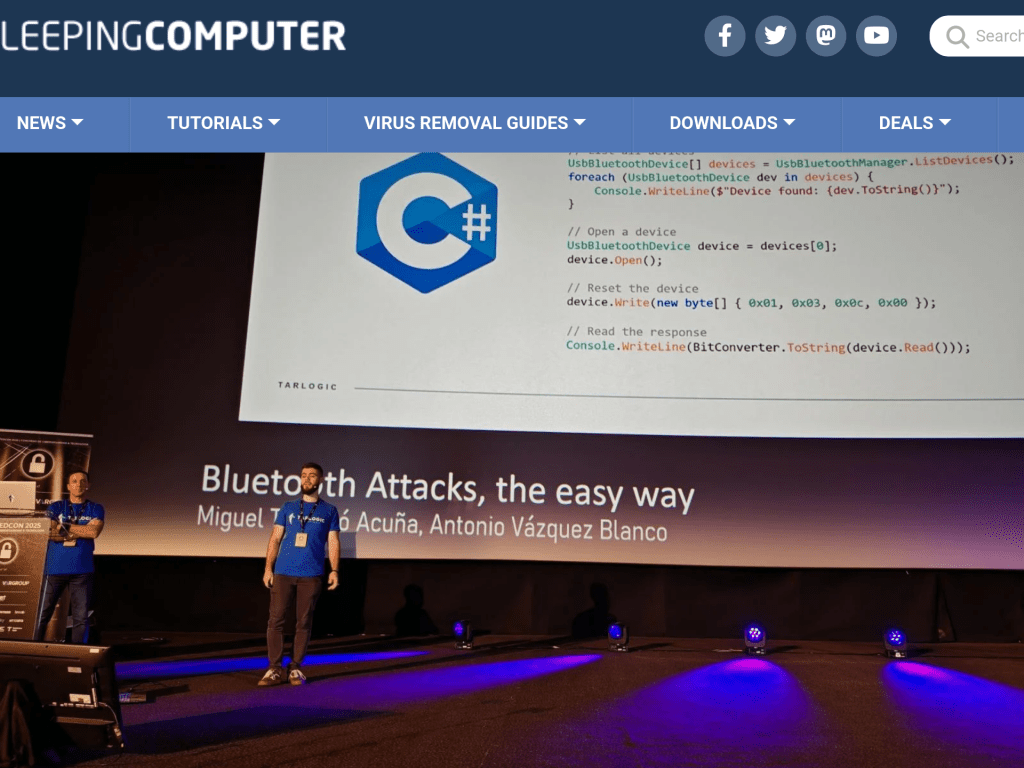
ESP32 is one of the world’s most widely used chips for Wi-Fi + Bluetooth connectivity in IoT (Internet of Things) devices, used by billions of devices.
“In total, they found 29 undocumented commands, collectively characterized as a “backdoor,” that could be used for memory manipulation (read/write RAM and Flash), MAC address spoofing (device impersonation), and LMP/LLCP packet injection.
Espressif has not publicly documented these commands, so either they weren’t meant to be accessible, or they were left in by mistake.”
“The term “Artificial Intelligence” (AI) is grossly misleading as no form or sort of intelligence exists at all. The only reason why this terminology is being used is because it is easier to sell. When most people think of AI they tend to think of something from science fiction.”
“Astera Labs has teamed up with Micron to deliver another industry-first technology development and accelerate the PCIe® 6.x ecosystem! At DesignCon 2025 in Astera Labs Booth #755, the two companies are showcasing the first public demonstration of end-to-end interoperability between a PCIe 6.x Switch and a PCIe 6.x SSD, currently available for ecosystem development.”
The new Micron PCI6 SSD offers about 27GB/s read speeds, doubling the current PCI 5.0 performance.















 /root
/root 