




-
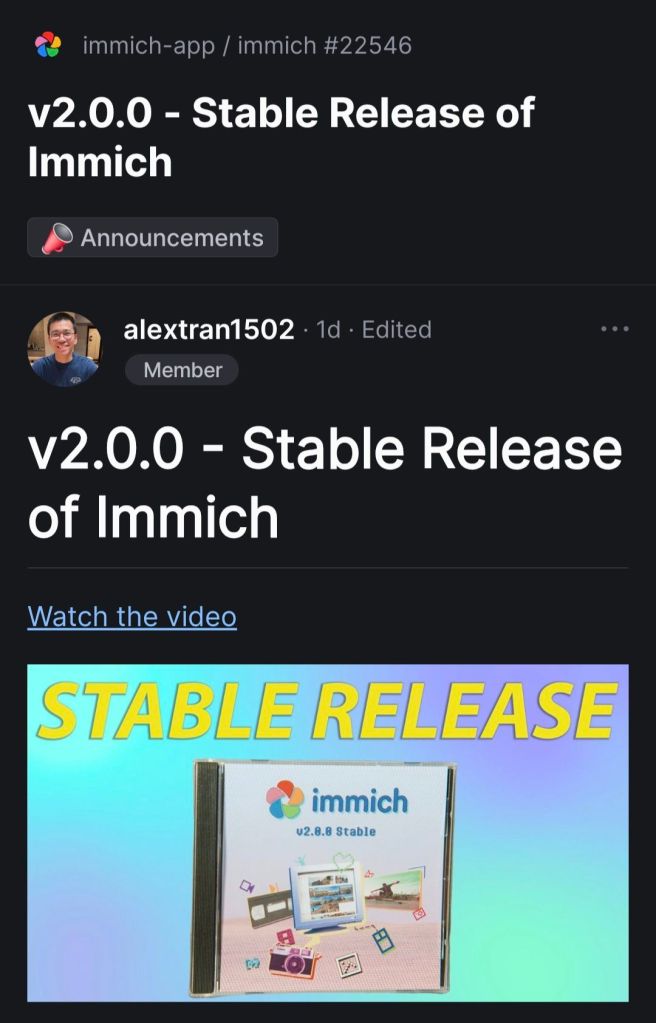
First time immich becomes stable.

-
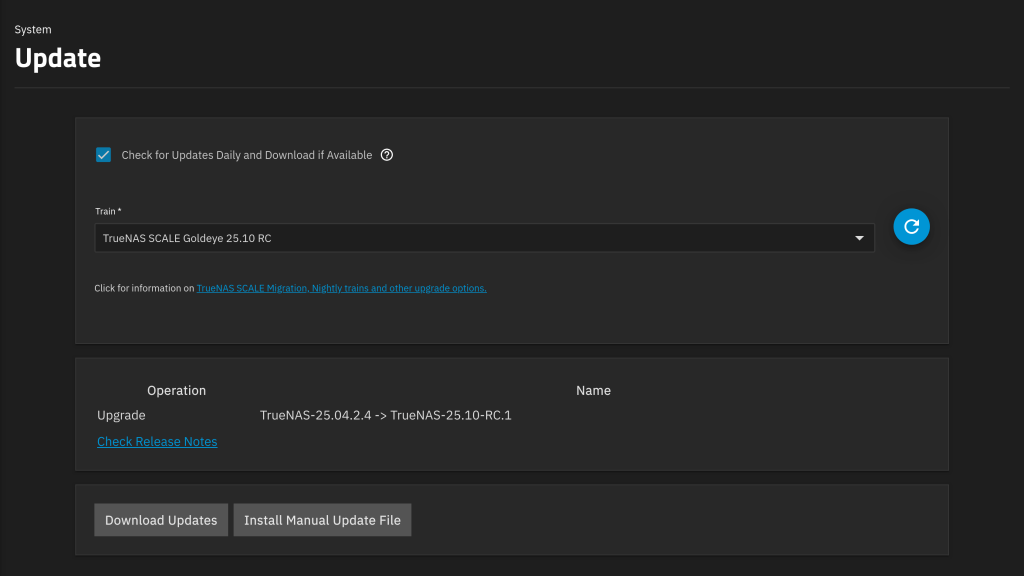
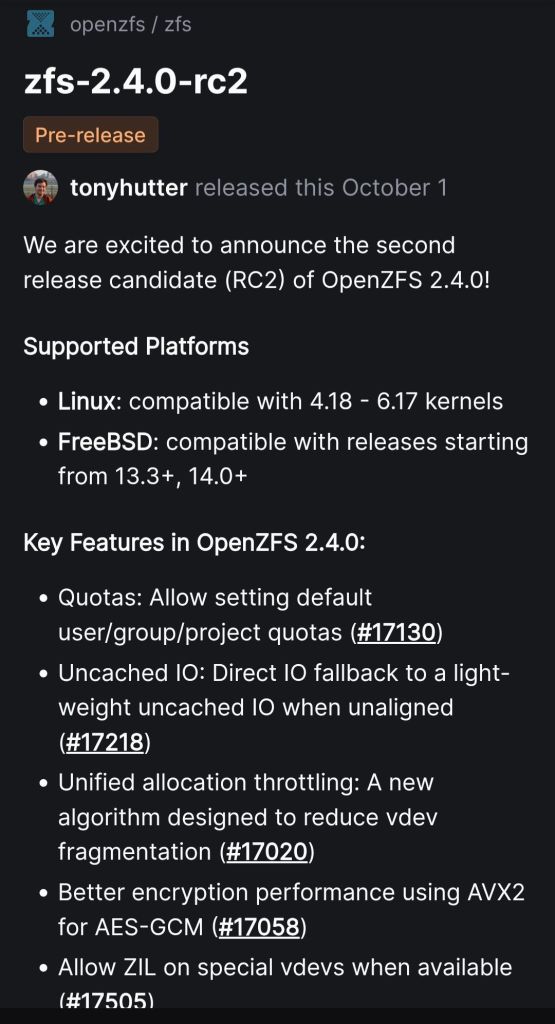
The second Release Candidate of the upcoming version.
-
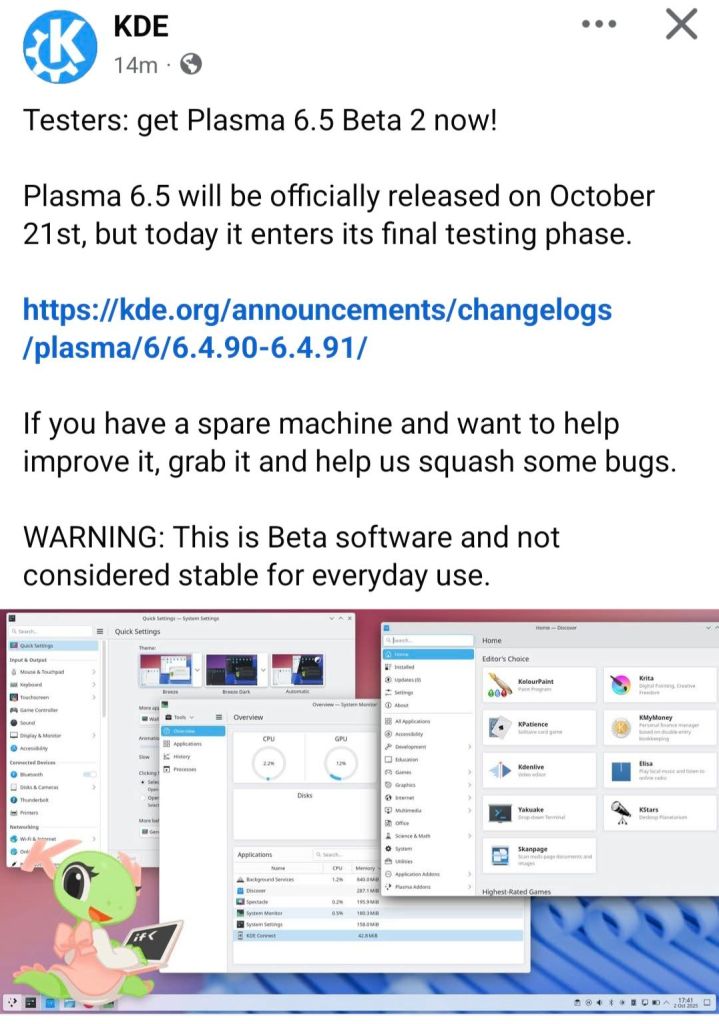
The KDE Plasma 6.5 stable release is scheduled for October 21, 2025. A beta version of Plasma 6.5 was released on September 18, 2025, allowing for public testing.

-
A very handy tool to convert screenshots in to text. If you have for example a scanned document or PDF you can easily copy the contents just using Spectacle.
A package dependency is Tesseract, that you can find in AUR.


There is also this pull request that adds native support for this functionality.


-
At Akademy 2025 this year, I had the privilege of giving a talk about a big picture topic close to my heart, and you can watch it here: For those who prefer reading over watching and listening, I’ll give a quick summary: I believe that the challenges facing the world today present an opportunity for […]
Talk at Akademy 2025 — minding the big picture: opportunity from chaos -
OpenZFS continues to evolve as a robust filesystem for everything from IoT devices to supercomputing clusters. The upcoming OpenZFS 2.4 release (Nov 2025) focuses on stability, usability, and performance.
Key Features in 2.4
- Fast dedup log pacing
- Fix for Encryption + ZFS send
- Skip slow RAID-Z children
- Improved allocation under fragmentation
- Scrub only changed blocks in a date range
- Parallel ARC eviction for large-memory systems
- Asynchronous ARC flush on pool export
- New JSON output,
zfs rewritecommand, project quotas on FreeBSD, ZVOL threading, and more
In-Development Features
- Label Redesign: Larger (256 MiB) labels, more uberblocks, support for larger sector sizes, better rewind and diagnostics.
- AnyRaid-Z: Flexible RAID-Z with mixed disk sizes for higher usable capacity.
- Forced Export: Allows safe forced unmount of suspended pools to restore uptime.
- AWS Enhancements: Optimized write strategies for provisioned IOPS EBS volumes.
Potential Features
- BRT Log: Improves performance of block cloning/reflinks.
- SMR Drive Support: Optimizations to handle overlapping track designs.
Future Technologies
- NVMe-connected HDDs: Standardized interfaces for reconfigurable storage.
- CXL (Compute Express Link): Disaggregated computing and memory pooling to scale ZFS without distributed FS complexity.
https://klarasystems.com/articles/zfs-new-features-roadmap-innovations/
-
FreeBSD 15.0 Alpha 3 Highlights
- Release Status
- Third of four planned alpha releases.
- Stable release expected in December.
- Branching in the development tree set for early October.
- Key Improvements
- WiFi drivers: Ongoing updates, including LinuxKPI and other wireless driver work.
- Better laptop support: Enhancements in WiFi, power management, and desktop usability.
- Desktop experience: KDE option added to installer.
- Other Updates
- pkgbase fixes: Improvements to release image building and installation.
- Package updates: Includes
unboundandbc.
- Outlook
- WiFi support improving but still behind Windows, Linux, and macOS.
- Reproducible builds and broader hardware support make 15.0 a major update.


- Release Status
-
Context
- Git 2.49 introduced a Rust foreign function interface.
- Currently, Rust support is optional in Git builds.
- RFC Proposal by Patrick Steinhardt
- Introduce Rust into Git’s core as a test balloon.
- Objectives:
- Allow experimentation and set up build infrastructure.
- Give distributors time to adapt to Rust toolchain needs.
- Signal that Git 3.0 will mandate Rust in the build system.
- Concerns
- Mandatory Rust may restrict platform and architecture support compared to C-only builds.
- Additional Note
- Git 3.0 is also planned to switch to SHA-256 as default.
- Status
- Discussion is ongoing on the Git mailing list.