“In 2017, the kernel jumped from two years of support to six. Now, six years later, it turns out that’s a lot of work. Linux Weekly News executive editor Jonathan Corbet announced the Linux kernel will return to two years of LTS support.
The plan to cut back down to two years isn’t instant.”
According to the article the currently LTS maintained kernels are 6 🙂
Just a discrepancy of review dates that I noticed, still not able to reproduce and report a bug.
There is a known bug that has to do with reviewing cards during the rollover hour (set at 4 hours past midnight as default) but it seems it is not the case here…
sudo rm /var/lib/pacman/db.lck removes the lock of the package database that pacman created when a package is about to get altered. This mechanism prevents a different instance of pacman to perform simultaneous changes but the lock can sometimes remain stale
According to the 2023’s Second Quarter Status Report boot optimizations speed up kernel boot process.
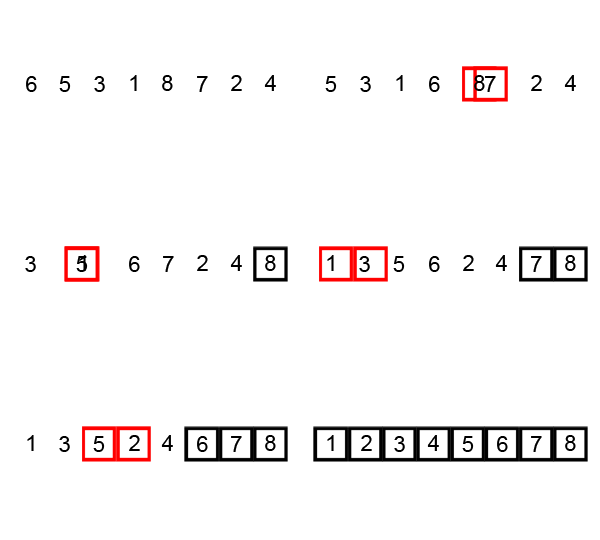
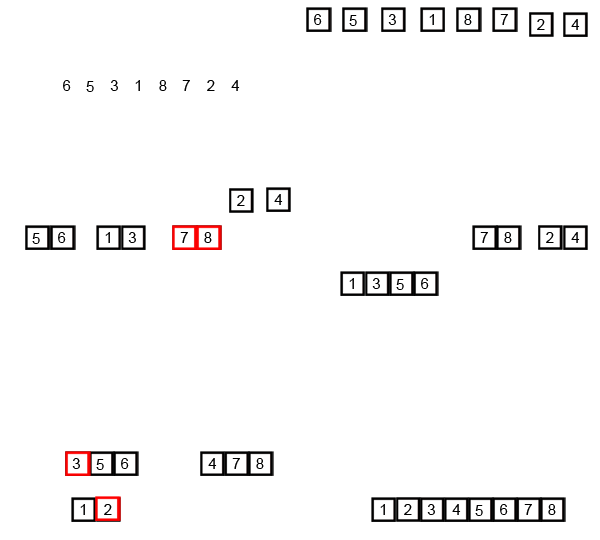
The developer Colin Percival implemented a mergesort algorithm instead of the 30+ year old bubblesort of SYSINITs.
Bubblesort is a sorting algortithm that compares each element of an array with the next one and sorts them, whereas mergesort divides the array into subarrays. This system boosted speed by a factor of 100x.
One of them is associated with the update process of the freebsd-update tool, as it incorrectly deleted files in /etc/, in case that the file to be updated matched the new release and was different than the old release …
Yeap sounds pretty … serious 🙂 Funny is that in order to apply the patch you have to use the same freebsd-update command lol
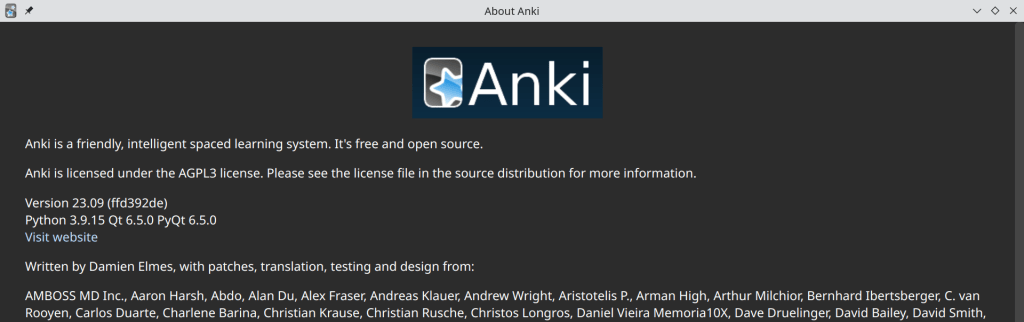
With this commit in Github the version system of Anki adopts a new year.month.patch approach. That means that the current version is 23.09. Damien decided this time period as this version brings some major features including FSRS and Image Occlusion
“A chroot is an operation that changes the apparent root directory for the current running process and their children. A program that is run in such a modified environment cannot access files and commands outside that environmental directory tree. This modified environment is called a chroot jail.”
I always have a spare USB device with an Arch Linux bootable iso just in case my system does not boot or after a package update that totally breaks my system.
In August 2022 there was a major GRUB bug that caused many systems failing to boot. At that time I was not in a home setting so chroot from a USB literally saved me.
Another case was using ibt=off in /etc/default/grub that turns off the Indirect Branch Tracking security feature, after a bug affected Nvidia drivers.
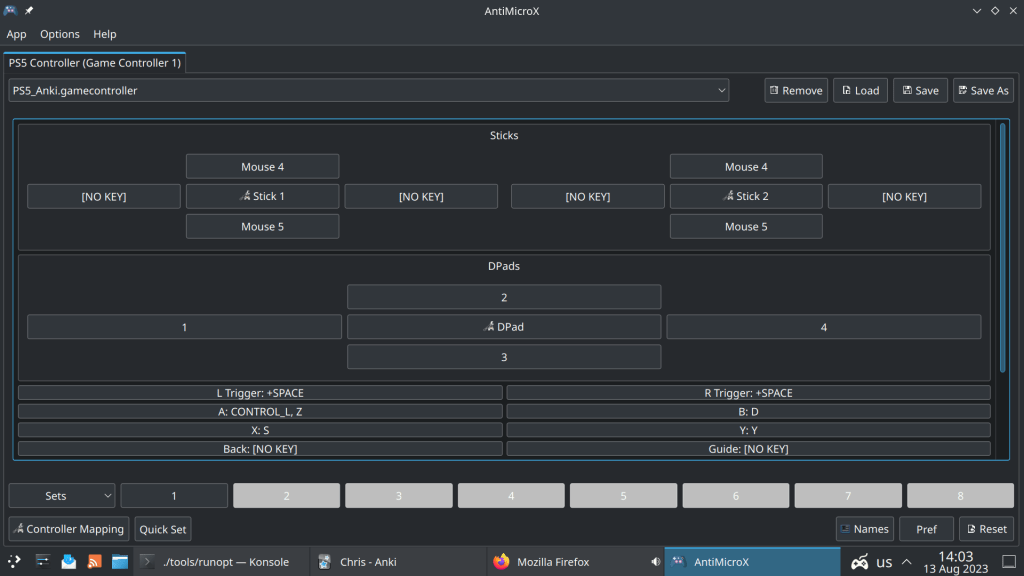
Using Anki at the beginning can be pretty unconfortable, as pressing the spacebar and 1,2,3,4 keys a million times can lead to tendonitis and makes reviews not enjoyable 😦
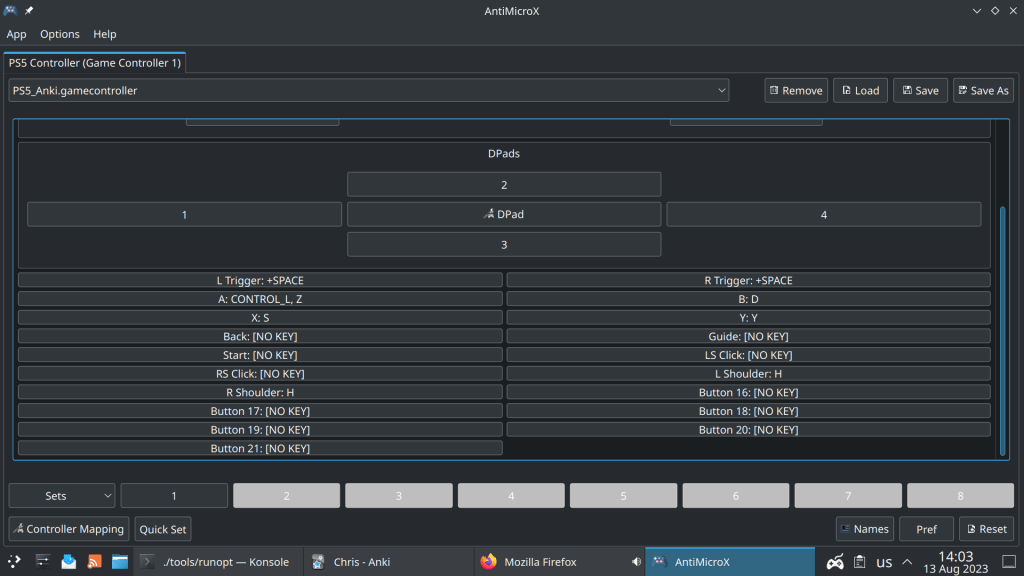
Instead using a PS4, Xbox or PS4 game controller gives a gaming character to your daily reviews, is easy and can be used while connecting your Laptop with an Ultra HDTV
Installing AntiMicroX, a graphical program used to map gamepad keys to keyboard, mouse, scripts and macros in Arch Linux Distros:
> yay -Ss antimicrox
aur/antimicrox-git 3.3.3.r2.g7a39dc43-1 (+4 0.05)
   Map keyboard and mouse actions to gamepad buttons, inspired by qjoypad.
Antimicro fork
aur/antimicrox 3.3.4-1 (+115 0.26) (Installed)
   Graphical program used to map keyboard buttons and mouse controls to a
gamepad
antimicrox is the stable release while antimicrox-git is the cutting edge, with the latest commits version.