




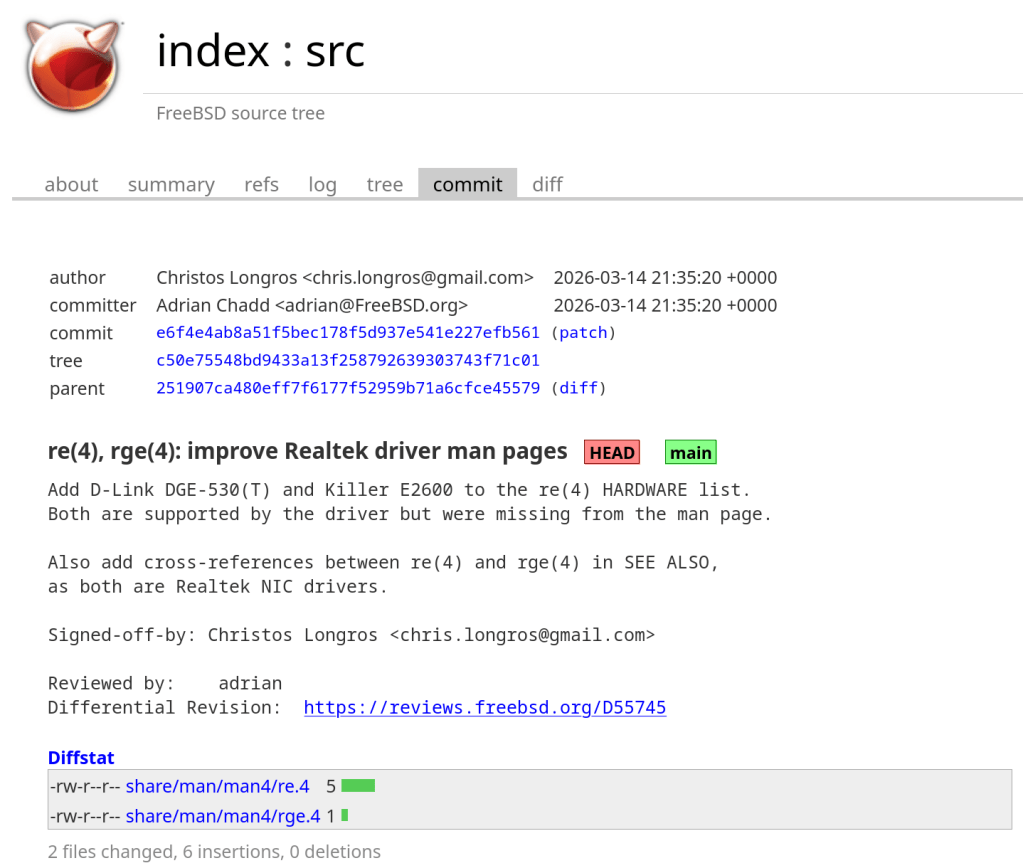
https://cgit.freebsd.org/src/commit/?id=e6f4e4ab8a51f5bec178f5d937e541e227efb561
With support for Intel’s Arrow Lake (Core Ultra Series 2) and Ryzen 9000 series (Zen5-based).

Instability issues for Intel Core i9-13900K and Core i9-14900K. Reports are not only from Gamers but also from Data Centers using the W680 motherboards instead of Z chipboards. Error logs reveal decompression issues with a 70%-30% Intel to AMD ratio…
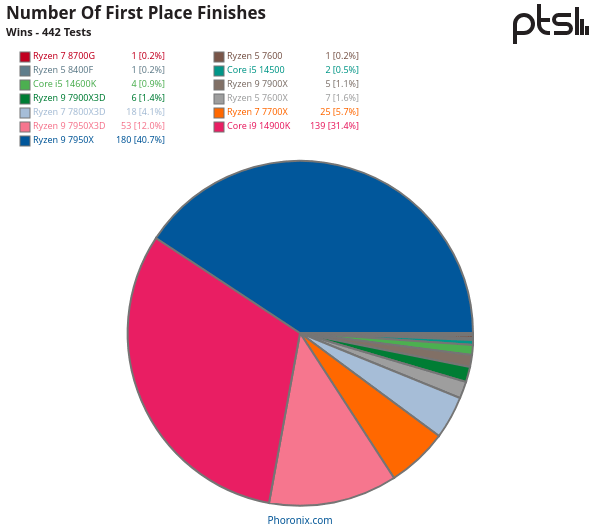
Really interesting benchmarks. Over 400 were performed with the Phoronix Test Suite. Kernel compilation was 58 seconds with my PC configuration. Ryzen 9 7950X was definitely the winner in the majority of benchmarks.
“Coming in first place most often was the Ryzen 9 7950X at 40.7% while the Ryzen 9 7950X3D 3D V-Cache processor led 12% of the time and then the Intel Core i9 14900K led 31% of the time.
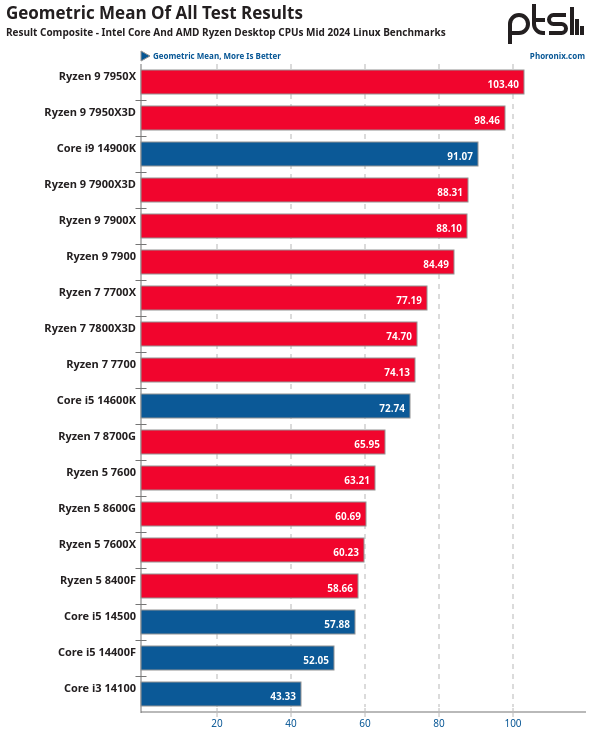
When taking the geometric mean of all the performance benchmark results ran on all 18 processors, the Ryzen 9 7950X was the firm first place performer for this wide range of workloads tested. The Ryzen 9 7950X was 13.5% faster than the Core i9 14900K. The Ryzen 9 7950X3D scored a comfortable second place finish and it was around 8% faster than the i9-14900K.”
https://www.phoronix.com/review/amd-ryzen-intel-core-linux610
“Advanced Performance Extensions (Intel® APX) Intel® doubles the number of general-purpose registers (GPRs) from 16 to 32. This allows the compiler to keep more values in registers; as a result, APX-compiled code contains 10% fewer loads and more than 20% fewer stores than the same code compiled for an Intel® 64 baseline.”

String processing is essential in many UNIX commands. C strings are terminated with nul characters.
Routines processing such strings, such as those provided by the C standard library libc are often reduced to walking through strings character by character in search for the nul terminator. This is why these operations have the reputation of poor performance.
The FreeBSD Team has been working in a reimplementation of libc string functions using SIMD techniques and getting advantage of instruction set extensions by new CPUs.
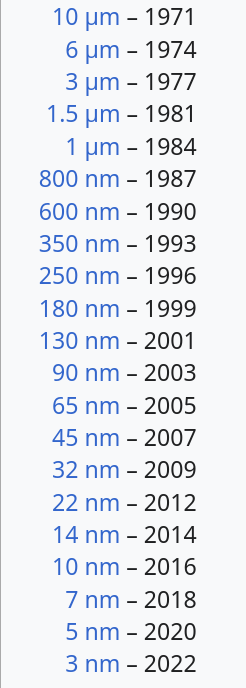
He proposed the so called Moore’s law:
The number of transistors in an integrated circuit (IC) doubles about every two years.
“The observation is named after Gordon Moore, the co-founder of Fairchild Semiconductor and Intel (and former CEO of the latter), who in 1965 posited a doubling every year in the number of components per integrated circuit,[a] and projected this rate of growth would continue for at least another decade. In 1975, looking forward to the next decade, he revised the forecast to doubling every two years, a compound annual growth rate (CAGR) of 41%. While Moore did not use empirical evidence in forecasting that the historical trend would continue, his prediction held since 1975 and has since become known as a “law”.”
 /root
/root 