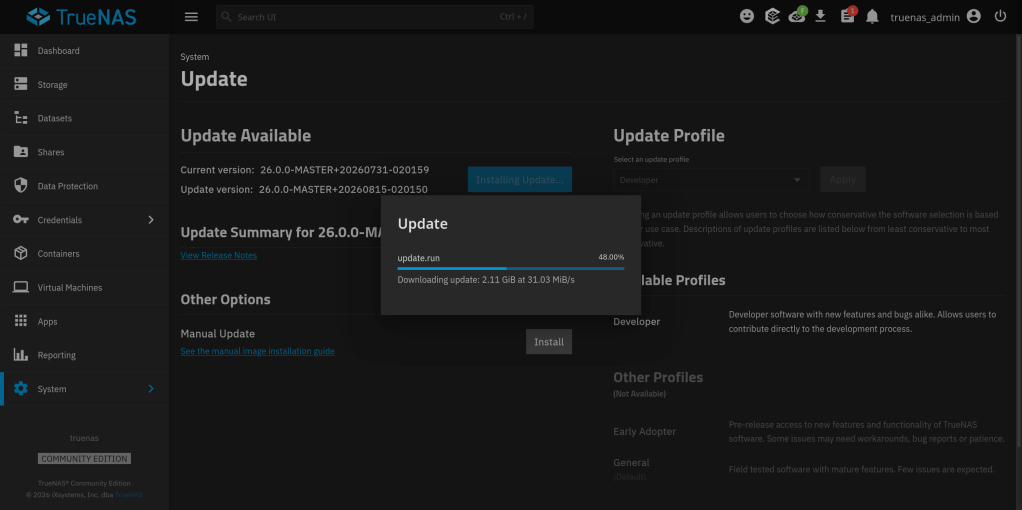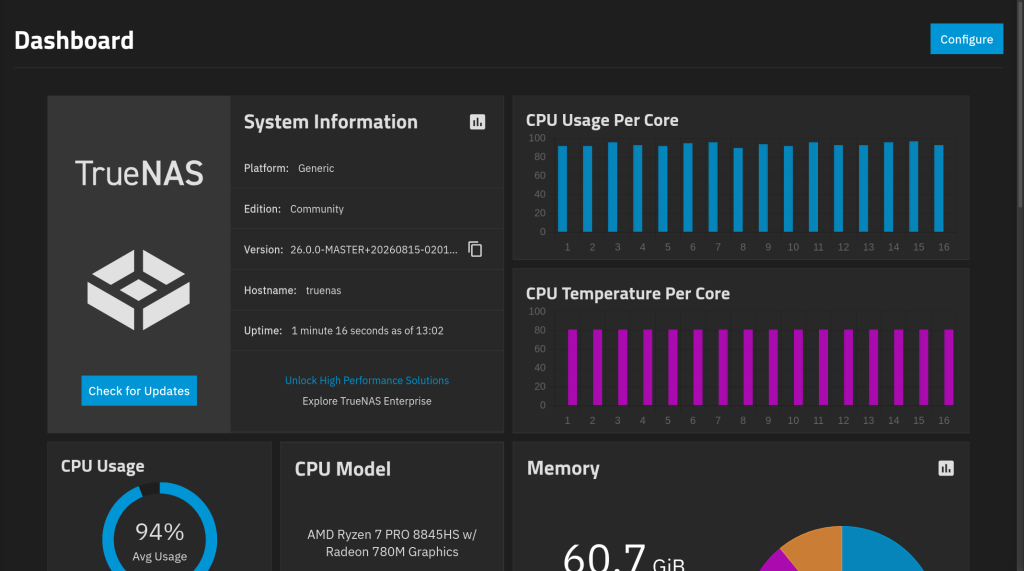




Supports fractional intervals lengths for same day review prediction of probability !!

Supports fractional intervals lengths for same day review prediction of probability !!

Officially an OpenZFS contributor 🙂

https://github.com/openzfs/zfs/commit/a7157221db1d3a7c3517dee98f5124c13a515053
TL;DR: Many professional societies run Zoom-based webinar series where you need to attend a minimum percentage of sessions to earn a certificate. I used Claude to audit my attendance history directly from Gmail, then automated the whole process with a Google Apps Script that detects new Zoom registration emails and adds calendar events — so you never miss a session again.
Many professional associations now run structured online education programmes through Zoom, where attendance is tracked and a certificate is awarded to participants who reach a certain threshold — typically 70% of live sessions. The problem is that life gets in the way: you register for a session, forget about it, and only realise you missed it when the “sorry you couldn’t make it” email arrives. Over a multi-month programme, these misses add up quietly.
The good news is that Zoom’s post-event emails are remarkably consistent and machine-readable. This makes the whole problem automatable.
Zoom always sends one of two emails after a webinar ends:
This means your full attendance history is sitting in your Gmail inbox, waiting to be counted. To find it, search Gmail using a query like:
from:no-reply@zoom.us ("thank you for attending" OR "sorry that you were not able") [your-series-keyword]
Replace [your-series-keyword] with something specific to your programme — the organiser’s domain, the series name, or any unique phrase that appears in your webinar emails. The results give you a complete attended/missed breakdown to calculate your current attendance rate.
Google Apps Script is a free JavaScript runtime that runs inside your Google account with direct access to Gmail and Google Calendar. No server, no third-party service, no cost.
The script does the following every hour:
The trickiest part was reliably extracting the date and time. Zoom confirmation emails always contain a line like:
Date & Time Oct 23, 2025 06:00 PM Amsterdam, Berlin, Rome, Stockholm, Vienna
The key insight is to anchor the regex on Date & Time rather than trying to detect a date anywhere in the body — robust across different webinar topics and templates:
const anchored = /Date\s*&\s*Time\s+(\w{3}\.?\s+\d{1,2},?\s+\d{4})\s+(\d{1,2}:\d{2}\s*[AP]M)(.*)/i;
const m = text.match(anchored);
// m[1] = "Oct 23 2025" m[2] = "06:00 PM" m[3] = "Amsterdam, Berlin, ..."
Zoom expresses timezones as a city list rather than an IANA string. A mapping function handles the conversion:
function mapTimezone(raw) {
const s = (raw || "").toLowerCase();
if (/amsterdam|berlin|rome|vienna|stockholm/.test(s)) return "Europe/Berlin";
if (/london|dublin|bst|gmt/.test(s)) return "Europe/London";
if (/eastern|new york|toronto/.test(s)) return "America/New_York";
// ... other timezones ...
return "Europe/Berlin"; // default
}
The script checks the calendar for an existing event with a matching title near the same date, and applies a Gmail label (Webinar-Added) to every processed thread — excluding it from future queries. Safe to re-run as many times as needed.
CONFIG block — specifically the keywords arraycreateProcessedLabel → click ▶ RuninstallTrigger → click ▶ RunbackfillHistoricalWebinars once for past emailsGoogle will show a warning: “Google hasn’t verified this app.” This is normal for personal Apps Scripts — click Advanced → Go to [project name] (unsafe) and grant permissions. You are the developer and sole user.
Everything lives in one CONFIG object at the top:
const CONFIG = {
processedLabel: "Webinar-Added",
calendarId: "primary",
defaultDurationMins: 90,
emailReminderMins: 24 * 60, // 1 day before
popupReminderMins: 60, // 1 hour before
// Change these to match your programme
keywords: [
"your-society-name", "your-series-name", "other-keyword",
],
};
Replace the keywords values with terms unique to your series — the rest works unchanged for any Zoom-hosted webinar programme.
The complete script is available on my GitHub. MIT licensed — adapt freely.
Tags: Google Apps Script, Zoom, Webinar, Automation, Gmail, Google Calendar, CME, Medical Education, Professional Development
Note: 1.96.0 and 1.96.1 were release candidates intended for testing only.
tailscale dns query|status command supports --json flag to return JSON output.tailscale wait [flags] command waits for Tailscale resources to become available for binding.tailscale ip command supports --assert=<specific-ip-address> flag to assert that one or more of the node’s IP addresses matches the specified IP address.tailscale version --track and tailscale update --track support release-candidate flag to check for and update to release candidate builds.tailscaled_peer_relay_endpoints gauge user metrics are available for Tailscale Peer Relays.AuthKey system policy applies only when a user is not in a logged in state.systray application on startup using autostart file with the tailscale configure systray --enable-startup=freedesktop command.node:osVersion attribute.A couple of weeks ago I opened two more pull requests to the OpenZFS project — PR #18303 and PR #18300. One adds a man page for a long-undocumented tool; the other removes stale flags from a core command that should never have been there in the first place.
My earlier OpenZFS contributions were on the C side: error handling improvements for zpool create (PRs #18184, #18213, and #18268 — ENXIO handling, device-specific error reporting, and an EDOM error handler). These new PRs continue in the same spirit of cleaning up rough edges, though from different angles.
zilstat has existed in OpenZFS for some time, but it was effectively undocumented — no man page, nothing in the official documentation. The tool gives you per-pool ZIL (ZFS Intent Log) statistics: commit counts, write sizes broken down by type, and itx classifications across indirect, copied, and needcopy writes.
If you are trying to understand whether a SLOG device is actually doing useful work, or why synchronous write latency is higher than expected, zilstat is exactly the right tool. The lack of a man page meant most users did not know it existed, and those who found it had to reverse-engineer its output from the source.
PR #18303 adds a proper man page covering the synopsis, description, output fields, and usage examples — so the tool is now actually discoverable and usable by anyone consulting the documentation.
This one is a code change, and a satisfying one. zpool clear had been quietly accepting three flags — -F, -n, and -X — that it had no business accepting. These are rewind flags inherited from OpenSolaris, where they make sense in the context of zpool import: when importing a pool that is not yet loaded, you can select a specific transaction group to rewind to.
But zpool clear is a completely different situation. It operates on an already-imported pool whose in-memory state is ahead of what is on disk. Rewinding transactions there would require force-exporting the pool first — it simply cannot work. The flags were vestigial, undocumented, and misleading to anyone who stumbled across them in the usage string.
PR #18300 removes -F, -n, and -X from zpool clear entirely. The rewind policy passed to zpool_clear() is now always ZPOOL_NO_REWIND. The usage string is cleaned up to match. This closes issue #13825, which had been open since 2022. The commit was reviewed by Alexander Motin (TrueNAS) and Brian Behlendorf (LLNL), and tested on FreeBSD 16.0-CURRENT.
Both of these PRs are about the same underlying problem: a gap between what the codebase does and what users can reliably know or rely on. An undocumented tool and a command silently accepting flags that do nothing are both forms of technical debt that erode trust in the tooling over time. Removing the wrong thing is just as valuable as adding the right thing.
I will keep working through the OpenZFS codebase where I find similar rough edges. If you have spotted something undocumented or suspect a flag that does not do what it claims, opening an issue — or better yet, a PR — is the way to move it forward.